


Practice, not routine.
Eight sauna, recovery and self-care rituals for women — morning, evening, after training, at home, across your cycle and on the road.
Download the guide as a PDFA routine is something you do. A ritual is something you inhabit. Each ritual below gives you the sequence, why it works, the manifq™ Spa·Sauna·Steam pieces made for it, and one journal question to close it.
For the science behind these practices, read the companion guide, The Female Body.
The Morning Ritual Wake slowly.
Before the phone, before the inbox. Fifteen minutes of water, light, movement and breath that set a calm, alert tone for the hours ahead. No equipment — a cool face cloth and something soft to move in.
Light, cool water and gentle movement raise alertness gradually. Moving every joint before the day asks anything of it — and finishing with slow breath — means the day starts regulated rather than rushed.
“What does my body need from today?”
The Sauna Ritual Heat, cool, still.
After training. After stress. After everything. Heat to open, cool to reset, stillness to settle, a page to close. Recovery is not the absence of effort — it is a discipline of its own.
Heat followed by deliberate cooling and rest is a rhythm of stress and recovery the body learns to respond to. The pad, the wrap and the page turn a physiological event into a ritual the mind can return to.
“What did I let go of in the heat?”
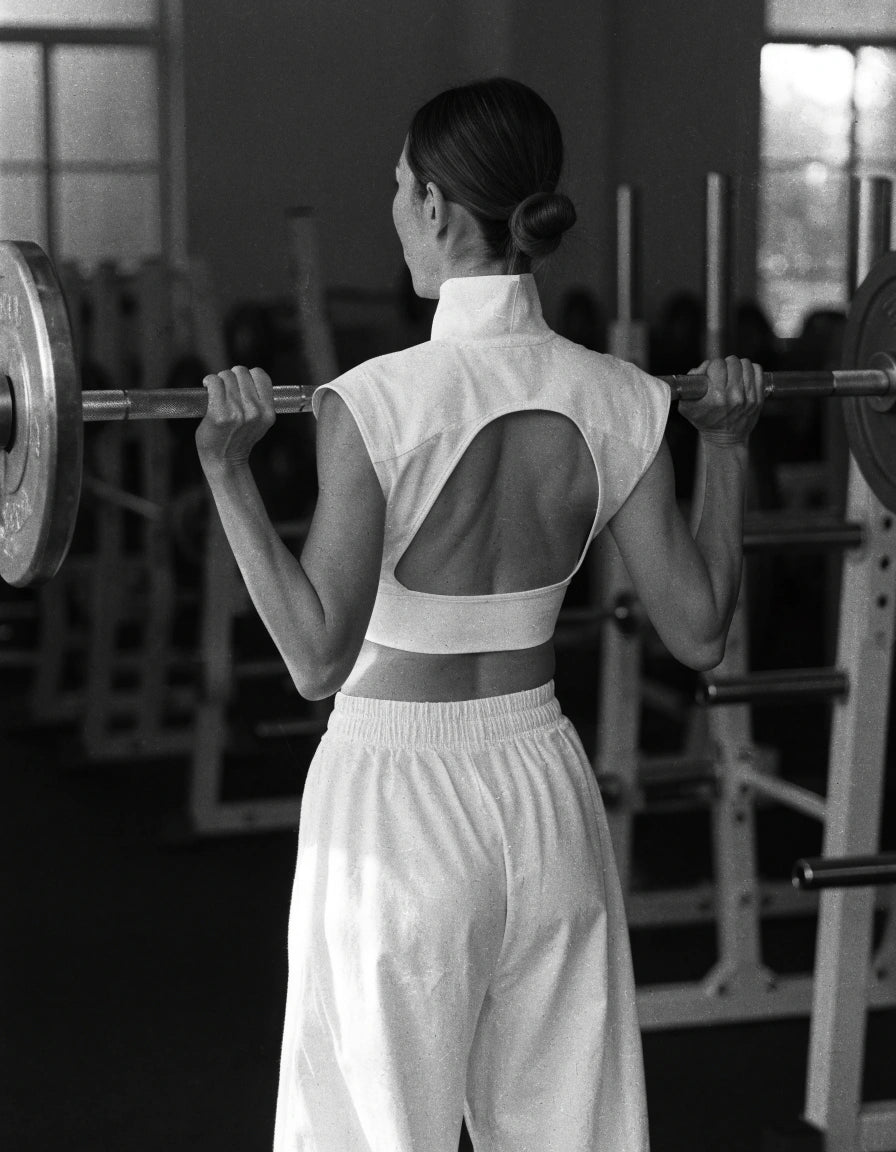
The Post-Training Ritual Finish the session.
A session ends when you have recovered from it, not when you put the weights down. Thirty minutes that move the body from effort into repair — with or without a sauna.
Cooling down, warmth and food all help the body change gears. Many women find a short round of heat after training eases muscle tension and makes the downshift easier — as long as it stays gentle and well hydrated.
“What felt strong today?”
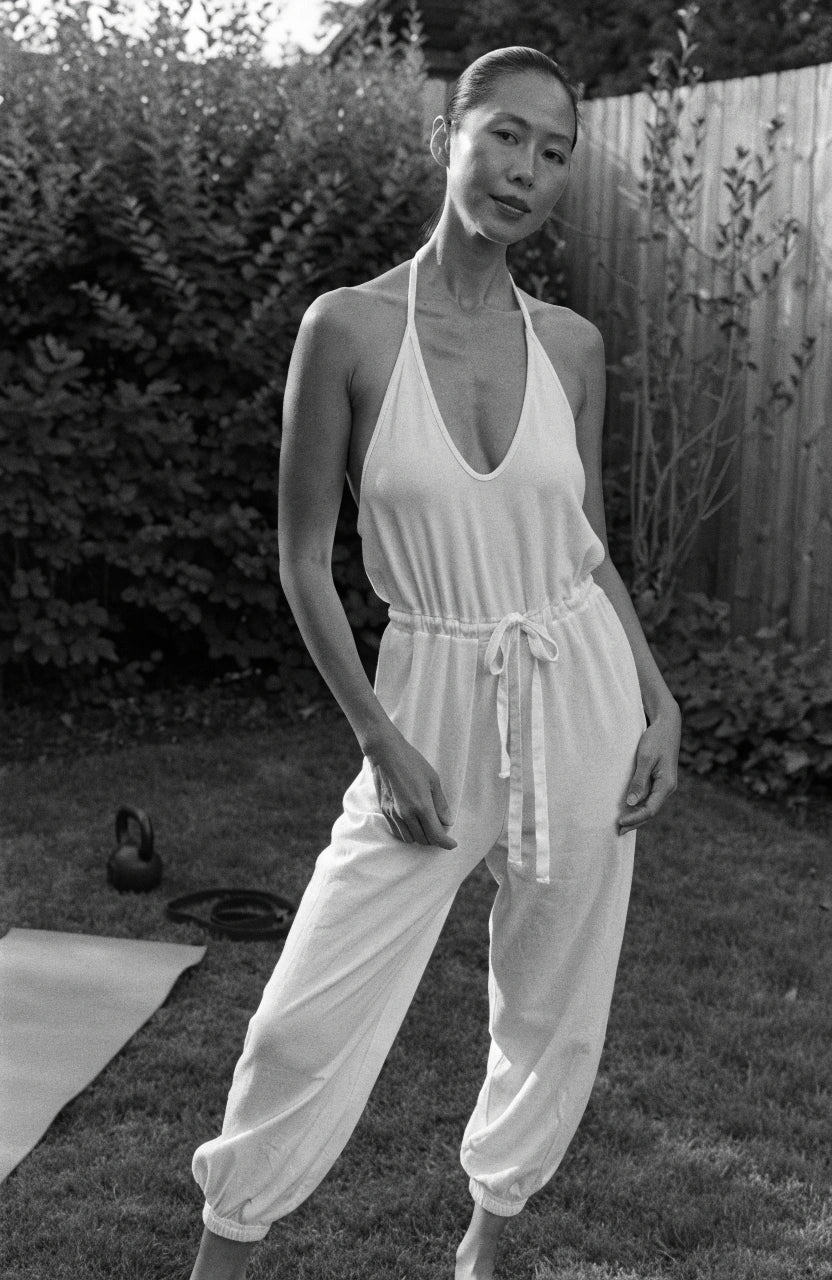
The Steam & Skin Ritual At home.
No sauna? Your bathroom will do. A hot shower or bath, warm steam and slow skin care turn an ordinary evening into a recovery practice.
Warmth followed by cooling helps the body downshift, just as it does in the sauna. Moisturiser applied to damp skin helps hold on to the water already there — a small detail that makes after-care work.
“Where am I holding tension?”
The Cycle-Aware Heat Ritual Adjust to your phase.
Your cycle changes how heat feels. Body temperature runs a little higher after ovulation, and energy, hydration and comfort shift across the month. Rather than one fixed routine, adapt the sauna ritual to the phase you are in.
The same sauna can feel completely different in week one and week four. Adjusting round length and rest to your phase keeps heat a recovery tool rather than one more stress.
“Where am I in my cycle, and what is it asking for?”
The Evening Wind-Down Hand the day over.
The half hour before sleep sets up the night. Warmth, breath, darkness and soft cotton give the nervous system the cues it needs to let go.
Sleep is a hand-off, not a switch. Warmth and cooling, soft texture, slow breath and darkness each give the body a reason to make that hand-off reliably.
“What can I put down before sleep?”
The Weekly Rhythm Not every day asks the same.
A week that alternates effort and recovery, with the rituals placed where they do the most good. Adjust it to your training, your work and your cycle — the rhythm matters more than the order.
Adjust to your cycle: swap a training day for recovery if your body asks for it, and use the Cycle-Aware Heat Ritual (V).
Alternating output and recovery across the week stops fatigue from quietly accumulating. The morning and evening rituals anchor every day; the sauna sits where recovery is needed most.
“Which day this week will be my reset?”
The Travel Ritual Ritual is portable.
Travel breaks routine, but ritual travels well. A small kit and four habits protect the things travel disrupts first — sleep, light, movement and reflection.
By protecting sleep, light, movement and reflection, the practice survives any change of place — and familiar textures make an unfamiliar room feel like yours.
“What do I want to carry home from this place?”
Which piece, which ritual.
Every piece in the Spa·Sauna·Steam collection works across several rituals.
| Piece | I | II | III | IV | V | VI | VII | VIII | Price |
|---|---|---|---|---|---|---|---|---|---|
| 有机纱布桑拿垫 | £19.00 | ||||||||
| 有机纱布 - 头巾 - 包头巾式发带 | £29.00 | ||||||||
| 有机纱布 - 面巾套组 | £39.00 | ||||||||
| 有机纱布 - 水疗裹身 - 可调节桑拿和健康裹身 | £79.00 | ||||||||
| 有机纱布 - 桑拿短裤 | £49.00 | ||||||||
| 有机纱布 - 无肩带文胸 - 抹胸上衣 | £39.00 | ||||||||
| 有机纱布——长袖露脐上衣——露肩款 | £59.00 | ||||||||
| 有机纱布眼镜盒和眼罩套装 | £29.00 | ||||||||
| Spa Sauna Steam Foldable Tote Bag | £29.00 | ||||||||
| Spa Sauna Steam Make up Bag | £19.00 |
Questions women ask about the sauna.
What should I bring to a sauna?
A sauna pad or towel to sit on, something to wrap your hair, a towel for after your rinse, something light and natural to wear between rounds, a water bottle, and a bag for damp things. Leave jewellery at home — metal heats up fast.
What do women wear in a sauna?
It depends on the sauna's custom: some are textile-free, others ask for swimwear or a wrap. Wherever clothing is worn, light, loose, breathable natural fibre such as cotton gauze is the most comfortable against hot, sweating skin.
How long should you stay in a sauna?
Start with 8–10 minutes per round and build gradually towards 10–15, with a cool-down and rest between rounds. Two or three rounds is plenty. Leave immediately if you feel dizzy, nauseous or unwell.
How often should I use a sauna?
Many people enjoy one to three sessions a week. Consistency matters more than length — a short, regular ritual does more than an occasional marathon.
Can I use a sauna on my period?
For most women, yes. Gentle warmth often eases cramps. Keep rounds shorter, drink more water, use whatever period product you are comfortable with, and leave if you feel faint.
Is a sauna good after a workout?
A short, gentle round after training can help you relax and ease muscle tension. Drink before you go in, keep it brief after hard sessions, and eat something afterwards.
Sauna or steam room — what is the difference?
A sauna uses dry heat at higher temperatures; a steam room uses lower temperatures with very high humidity, so it feels hotter on the skin than the number suggests. Both can be part of the same ritual.
How do I protect my hair in the sauna?
Wrap it. Dry heat can leave hair brittle, so cover it with a breathable cotton wrap, rinse it after your session and condition the ends.
What is a sauna pad for?
A sauna pad keeps you off hot wood, absorbs sweat and keeps the bench clean for the next person. In many saunas, sitting on a towel or pad is basic etiquette.
Can I sauna when pregnant?
Speak to your doctor or midwife first. Raising core temperature is a particular concern in early pregnancy, so most guidance advises caution or avoidance.
Receive our monthly observations
Essays, anatomy, movement, and thoughtful releases. By signing up, you agree with our privacy policy.